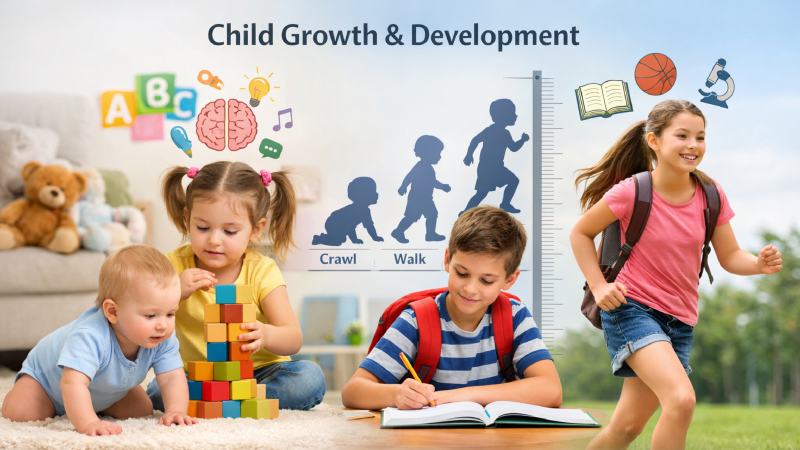
Watching a child grow is one of life’s most rewarding experiences. Each stage of childhood brings new milestones, challenges, and joys. Understanding the principles of child growth and development helps parents provide the right support, guidance, and care to ensure their children thrive physically, emotionally, socially, and cognitively.
This comprehensive guide will explore the stages of child development, factors affecting growth, strategies for promoting healthy development, and tips for overcoming common challenges. By following these guidelines, parents can foster confident, healthy, and well-rounded children.
What Is Child Growth and Development?
Child growth refers to the physical changes a child experiences, such as increases in height, weight, and organ development. Child development encompasses broader aspects, including:
- Cognitive growth (thinking, learning, problem-solving)
- Emotional development (self-awareness, empathy, resilience)
- Social development (interacting with others, communication, teamwork)
- Physical skills (gross and fine motor abilities)
Both growth and development are interconnected. A child’s physical health can influence learning, while emotional well-being can affect social relationships.
The Importance of Understanding Child Growth and Development
Understanding child growth and development helps parents:
- Set realistic expectations for behavior and skills
- Recognize developmental delays early
- Provide age-appropriate guidance and support
- Foster a nurturing environment for learning
- Strengthen parent-child bonding
Experts such as Jean Piaget and Erik Erikson emphasize that responsive parenting positively affects cognitive, emotional, and social growth.
Factors Affecting Child Growth and Development
Several factors influence how children grow and develop:
- Genetics
A child inherits physical traits, potential height, intelligence tendencies, and certain health risks from their parents.
- Nutrition
Proper nutrition supports physical growth and brain development. Deficiencies can slow growth or impair cognitive abilities.
- Environment
A safe, stimulating, and supportive environment encourages curiosity, learning, and emotional stability.
- Parental Involvement
Engaged parents promote secure attachment, confidence, and social skills.
- Health and Medical Care
Regular check-ups, vaccinations, and timely treatment of illnesses ensure proper growth.
Stages of Child Growth and Development
- Infancy (0–12 months)
Key developmental milestones:
- Physical: Rapid weight gain, growing motor skills, first teeth
- Cognitive: Recognizing caregivers, early communication through cries and gestures
- Social: Bonding and attachment with parents
- Emotional: Expressing needs and forming trust
Tips for Parents:
- Provide responsive care
- Encourage tummy time for motor development
- Talk, sing, and read to stimulate cognitive growth
- Toddlerhood (1–3 years)
Key milestones:
- Physical: Walking, running, improved coordination
- Cognitive: Learning words, solving simple problems
- Social: Parallel play, early sharing, following routines
- Emotional: Expressing independence and frustration
Parental Guidance:
- Encourage exploration safely
- Offer choices to build decision-making skills
- Introduce basic rules and routines
- Preschool Age (3–5 years)
Key milestones:
- Physical: Refining motor skills, drawing, and climbing
- Cognitive: Learning numbers, letters, imagination, curiosity
- Social: Cooperative play, understanding rules
- Emotional: Beginning empathy, handling emotions
Tips:
- Support creativity through play
- Encourage social interaction
- Provide opportunities for problem-solving
- School Age (6–12 years)
Key milestones:
- Physical: Steady growth, improved coordination
- Cognitive: Reading, writing, reasoning, logical thinking
- Social: Developing friendships, teamwork skills
- Emotional: Understanding rules, coping with stress
Parental Strategies:
- Encourage hobbies and learning
- Support peer interactions
- Praise effort rather than just outcomes
- Adolescence (13–18 years)
Key milestones:
- Physical: Puberty, sexual maturation, rapid growth
- Cognitive: Abstract thinking, planning, moral reasoning
- Social: Peer influence, identity exploration
- Emotional: Increased independence, self-awareness
Parental Tips:
- Maintain open communication
- Respect autonomy while setting boundaries
- Guide decision-making and life skills
Promoting Healthy Child Growth and Development
- Nutrition
- Provide a balanced diet with fruits, vegetables, proteins, and whole grains
- Ensure sufficient vitamins and minerals for growth
- Avoid excessive sugar and processed foods
- Physical Activity
- Encourage daily play and exercise
- Promote outdoor activities for physical and mental health
- Support fine motor skill development through arts and crafts
- Emotional Support
- Show love and affection
- Validate feelings and encourage emotional expression
- Build resilience through guidance and reassurance
- Cognitive Stimulation
- Read together daily
- Engage in educational games and puzzles
- Encourage curiosity and questioning
- Social Skills
- Provide opportunities for group activities
- Model respectful communication
- Teach empathy and cooperation
Recognizing Developmental Delays
Early identification ensures timely intervention. Warning signs include:
- Delayed speech or language
- Limited social interaction
- Difficulty walking or performing fine motor tasks
- Emotional outbursts or extreme anxiety
Consult a pediatrician or child development specialist if concerns arise.
The Role of Play in Child Growth and Development
Play is essential for physical, cognitive, and emotional growth.
- Physical: Running, climbing, and ball games strengthen muscles
- Cognitive: Puzzles and strategy games develop problem-solving
- Social: Group play teaches sharing and cooperation
- Emotional: Pretend play helps process feelings
Allow unstructured and guided play for optimal development.
Building a Positive Home Environment
A nurturing home influences growth significantly:
- Safe and child-friendly spaces
- Consistent routines and rules
- Opportunities for learning and exploration
- Encouragement and positive reinforcement
Children thrive when they feel secure and supported.
The Importance of Sleep
Adequate sleep is vital for growth and brain development:
- Infants: 14–17 hours
- Toddlers: 11–14 hours
- School-age children: 9–12 hours
- Teenagers: 8–10 hours
Establishing bedtime routines improves sleep quality and supports overall development.
Supporting Mental and Emotional Health
Children need emotional guidance to manage stress, fear, and frustration:
- Teach coping strategies
- Listen and validate feelings
- Avoid harsh criticism
- Encourage expression through art or storytelling
A strong emotional foundation supports long-term well-being.
Monitoring Physical Growth
Regular check-ups track:
- Weight and height
- Head circumference in infants
- Body mass index (BMI) in older children
Timely monitoring helps detect growth issues or nutritional deficiencies early.
Encouraging Independence
Children develop confidence and life skills through independence:
- Age-appropriate chores
- Decision-making opportunities
- Responsibility for personal items
- Learning to solve problems independently
- Independence fosters resilience and self-esteem.
The Role of Parents and Caregivers
Parents play a critical role in child growth and development:
- Serve as role models
- Provide guidance, discipline, and support
- Encourage learning and curiosity
- Monitor health and nutrition
- Celebrate milestones and achievements
Active involvement strengthens parent-child bonds and promotes overall growth.
Challenges in Child Growth and Development
Common challenges include:
- Nutritional deficiencies
- Behavioral issues
- Learning difficulties
- Peer pressure
- Mental health concerns
Early intervention and professional guidance ensure children overcome challenges.
Final Thoughts
Understanding and supporting child growth and development is crucial for raising healthy, confident, and well-rounded individuals. Every child is unique, and parents play a pivotal role in guiding their journey from infancy to adolescence.
By focusing on nutrition, physical activity, emotional support, cognitive stimulation, and social skill development, parents can create an environment that fosters holistic growth. Early identification of delays, positive parenting strategies, and maintaining open communication build resilience and a strong foundation for lifelong learning.
Child growth and development is a continuous journey. With patience, knowledge, and consistent support, parents can help their children reach their full potential, ensuring a bright and successful future.