
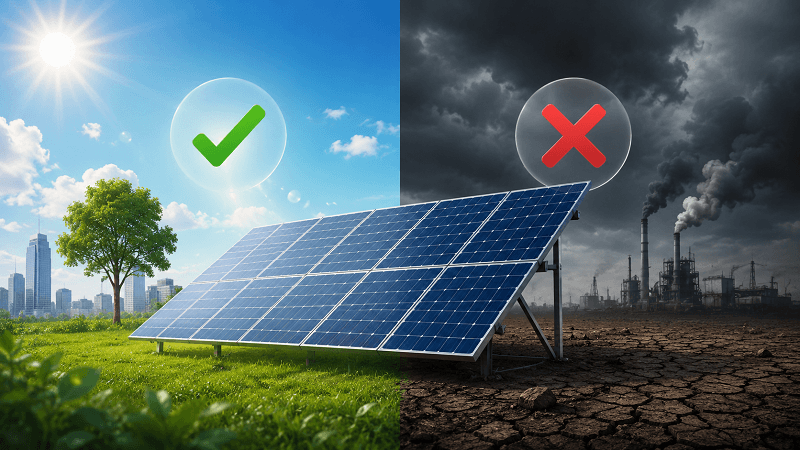
As energy prices continue to fluctuate and environmental awareness grows, more homeowners are considering solar panels as a long-term investment. Once viewed as a niche technology, solar energy has become increasingly accessible thanks to improved efficiency, lower installation costs, and government incentives in many parts of the world.
However, while solar panels offer many benefits, they are not the perfect solution for every home or every budget. Understanding both the advantages and disadvantages can help you decide whether investing in solar power is the right choice for your household.
The Advantages of Solar Panels
One of the biggest reasons homeowners choose solar panels is the opportunity to reduce electricity bills. By generating your own electricity during daylight hours, you rely less on the power grid, which can significantly lower monthly energy costs. Depending on your system size, local electricity prices, and your household’s energy usage, the savings can be substantial over the life of the system.
Solar panels also provide protection against rising energy costs. Electricity prices tend to increase over time, but once your solar system is installed, much of your power comes from the sun at no additional cost. This can make household expenses more predictable and help families better manage their budgets.
Another major benefit is the positive environmental impact. Solar energy is a renewable resource that produces electricity without burning fossil fuels. By switching to solar power, homeowners can reduce their carbon footprint and contribute to cleaner air and a more sustainable future.
Modern solar panels are also remarkably durable. Most quality solar panel systems are designed to withstand harsh weather conditions including rain, hail, wind, and intense sunlight. Many manufacturers offer warranties of 25 years or more, although panels often continue producing electricity well beyond that period.
Installing solar panels may also increase property value. Many buyers view an existing solar system as an attractive feature because it can reduce future energy costs. As sustainability becomes increasingly important, homes with energy-efficient upgrades often stand out in the property market.
The Disadvantages of Solar Panels
Despite their many benefits, solar panels are not without drawbacks. The most obvious is the initial installation cost. Although prices have fallen considerably over the past decade, purchasing and installing a complete solar system still represents a significant investment. While financing options and government rebates may help reduce the upfront expense, it can still take several years before the system pays for itself through energy savings.
Solar panel performance also depends heavily on sunlight. Homes located in areas with frequent cloud cover or long winters may generate less electricity than properties in sunnier climates. Likewise, roofs shaded by trees or nearby buildings may not provide ideal conditions for maximum energy production.
Energy production is limited to daylight hours. While panels continue to generate some electricity on cloudy days, they produce nothing at night. Many households remain connected to the electricity grid or install battery storage systems to provide power when the sun is not shining. Batteries improve energy independence but add significantly to the overall system cost.
Roof suitability is another important consideration. Older roofs may require repairs or replacement before installation. The roof’s angle, direction, and available space can also affect how much electricity the panels generate. Not every property is ideally suited for solar power.
Finally, although maintenance requirements are generally low, solar panels are not completely maintenance-free. Dirt, dust, leaves, and bird droppings can reduce efficiency if allowed to accumulate. In some locations, occasional cleaning and routine inspections help ensure the system continues operating at peak performance.
Is Solar Worth the Investment?
Whether solar panels represent good value depends on several factors, including your local climate, electricity prices, available government incentives, and how long you plan to remain in your home.
For homeowners with good roof exposure and high electricity costs, solar panels often provide an excellent long-term return on investment. While the initial cost may seem high, the combination of lower utility bills, potential property value increases, and environmental benefits can make the investment worthwhile over time.
On the other hand, if your roof receives limited sunlight, you expect to move in the near future, or local electricity costs are relatively low, the financial benefits may be less compelling.
Making an Informed Decision
Solar technology continues to improve, making systems more efficient and affordable than ever before. Before making a decision, it’s worth obtaining quotes from several reputable installers and requesting an assessment of your property’s solar potential. Comparing installation costs, expected energy production, warranty coverage, and estimated savings will help you determine whether solar power is a smart investment for your circumstances.
Ultimately, solar panels offer an attractive combination of financial savings and environmental responsibility. While they may not suit every home, for many homeowners they provide a practical way to reduce energy bills, increase energy independence, and contribute to a cleaner future. By carefully weighing both the pros and cons, you can make a confident decision that aligns with your budget, lifestyle, and long-term goals.