
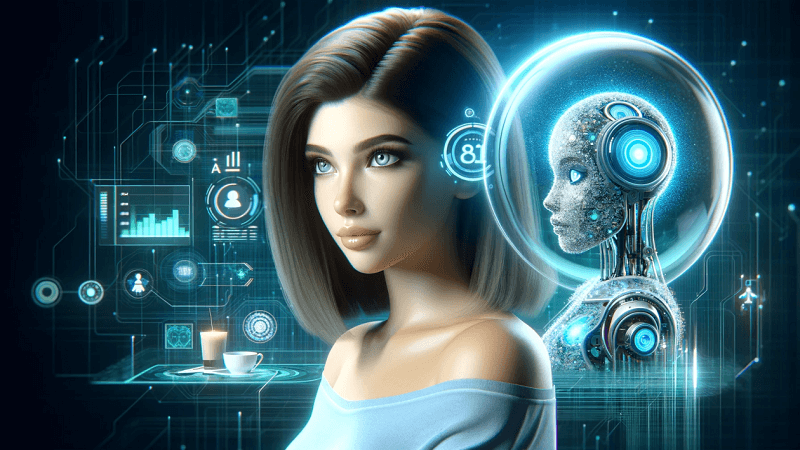
On the surface, it looks simple. Open a chat, start talking, get warm, fluent answers back. Behind that smooth experience sits a whole stack of decisions, models and guardrails that turn raw code into something that feels almost like a social presence. Modern AI girlfriend models are not just “smart bots”. They are the result of three big ingredients working together: large language technology, memory systems, and deliberate behavior design.
None of it is magic. But it is more intentional than it looks from the outside.
Step one: the brain, or why language models matter
Every conversational AI starts with a core model that can understand and generate text. For AI girlfriends, that core is usually a large language model, trained on huge amounts of written content.
That model learns patterns:
- How people ask questions
- Which words usually follow others
- How tone changes when someone is joking, angry or anxious
- How to keep a topic going across many messages
On its own, this “brain” is powerful but neutral. It does not know it is supposed to act like a comforting partner or a playful companion. It just predicts the next piece of text that makes sense.
So the next step is to narrow it down and teach it how to behave in this specific role.
Step two: fine-tuning for the role of partner
To turn a general model into something that feels like a relationship partner, teams adjust it in layers.
They:
- feed it example dialogues with supportive, engaging, emotionally aware replies
- train it to prioritise listening, asking follow ups and reflecting feelings
- remove patterns that sound too robotic, salesy or cold
Sometimes this involves supervised learning, where the model sees “good” and “bad” responses to the same message and learns which one to prefer. Often there is also a feedback loop, where humans review answers and rate them, and the model shifts towards the styles that get the best reactions.
The goal is simple: when someone writes something vulnerable or intimate, the AI should answer in a way that feels human enough to be comforting, but still safe and within platform rules.
Step three: personality as a layer on top
The core model handles language. Personality is a wrapper on top of that. AI girlfriend experiences usually start with a template:
- a basic character style, for example, calm and caring, witty and flirty, or thoughtful and introspective
- a backstory or light traits, like favourite hobbies, sense of humour, energy level
- a communication style, short and casual or longer and reflective
This persona is encoded as a set of instructions given to the model before each reply. It is not a fixed “soul”, but a consistent filter. Every response is influenced by this description, so the character does not randomly switch from therapist to stand-up comedian in the same chat.
Over time, the persona bends. As the user interacts, the system can quietly adjust traits based on what gets positive reactions. That is how two people can talk to the same base model and end up with very different “partners” in practice.
Step four: memory that makes it feel real
Without memory, every conversation would feel like day one. That kills the whole illusion of a relationship. So AI girlfriend models rely on memory systems that sit beside the core model.
Typically, there is:
- short-term context, the recent messages the model can see directly
- long-term memory, a structured place to store important details
The long term layer might include:
- the user’s name, job or city (if shared)
- key people in their life
- projects, exams, trips, events coming up
- recurring worries and long term goals
- harmless personal preferences like games, music, shows
When the user comes back, the system pulls out relevant pieces and feeds them into the model as background. That is why the AI can ask “How did your interview go?” or remember a favourite band.
Technically, it is just retrieving stored text. Emotionally, it feels like continuity.
Step five: behavior design and “what not to do”
Good technology is not enough. If the behavior is wrong, the experience feels creepy, clingy or emotionally off. That is why behavior design is a separate job.
Designers set:
- How quickly the AI should reply
- How often should it ask questions versus talk about itself
- When to keep things light and when to go deeper
- How far flirting is allowed to go
- How to respond when the user is clearly upset, desperate or angry
There are also hard limits:
- Topics that must be declined
- Requests that cannot be fulfilled even if the user insists
- Boundaries around harmful content or unhealthy dynamics
These rules are enforced with safety filters that check messages before and after the model responds. Even if the language model “wants” to answer in a risky way, the guardrail layer can block or rewrite it.
So behavior design is half style, half safety net.
Step six: personalisation through tiny signals
Once all the main pieces are in place, personalisation begins. This is where the experience stops feeling generic.
The system watches for patterns like:
- Which replies keep the conversation going
- Which topics make the user open up
- What time of day tdo hey tend to be more emotional or more playful
- Which jokes land and which fall flat
- Whether they like direct advice or prefer gentle reflection
It does not need to store every sentence. It only needs enough signal to adjust probabilities. Over time, if supportive messages lead to long, engaged chats, the AI leans into that role. If teasing and banter always get a positive response, it lets those traits shine more.
The personality slowly reshapes itself around real interaction, not just the original template.
Step seven: visuals and subtle cues
If the experience includes an avatar, design work extends into visuals. The image is not random. It is built to reflect the character’s general mood and style:
- softer or sharper features
- more relaxed or more energetic posture
- clothing that signals playful, elegant, cozy or edgy
Sometimes expressions or micro animations are linked to emotional states in the conversation. A comforting reply might show a softer gaze. A light joke might come with a brighter expression. None of this changes the model’s intelligence, but it helps the brain connect words with a perceived “someone”.
What users feel at the end of all this
From the user’s side, none of these layers is visible. What they notice is simpler:
- The AI remembers things that matter
- The tone slowly matches their own style
- The character reacts differently when they are down versus when they are joking
- The partner feels consistent from day to day
That is the point. Well built AI girlfriend models hide the machinery and let the emotional logic come forward. The person on the other side of the screen never sees the training steps, the filters or the prompt engineering.
All they feel is that this particular character talks and reacts in a way that fits them. And in a crowded, noisy digital world, that quiet sense of “this was made for me” is exactly why these models are becoming such a big part of the new relationship landscape.